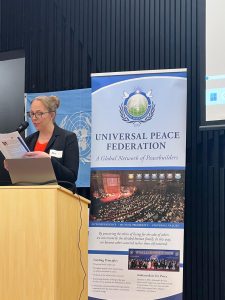
UMSLV attends UN International Day of Peace Conference
Today is the United Nations Day of Peace. The theme this year is Act now for a peaceful world 
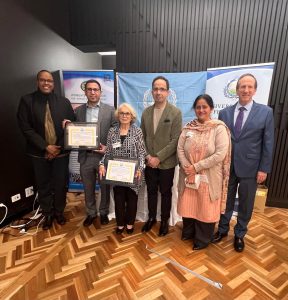
Thank you Women’s Federation for World Peace Australia and UFP for organising a conference yesterday for this. Arfa Sarfaraz presented at this conference and was also attended by her daughers; Khatija, and her mother Kooresha.
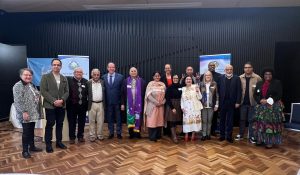
This remarkable gathering brought together voices across generations, faiths, and professions, united by a shared commitment to peace, justice, and human dignity. The day began with a reminder that peace is not just the absence of conflict but the presence of understanding — that we must see one another not through the lens of “us versus them,” but through the deeper identity of our shared humanity. We were challenged to move beyond polarization, listen with humility, and allow compassion — not ideology — to guide our response to a fractured world.
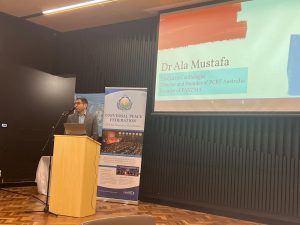
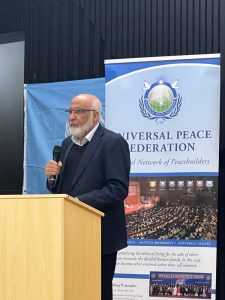
John highlighted the importance of teaching family values and shared moral principles as part of Australian community life. Respecting parents, loving spouses, and raising children well, they reminded us, are universal values that must be intentionally nurtured. Faith and secular ethics, when combined, can call forth the best of humanity and create a framework for coexistence where dialogue is not about winning but understanding.
We heard from Raviana, a young refugee and founder of Psylaw, who spoke on A Peace of Mind. Drawing from Psylaw’s partnership with a preschool in Myanmar, she explored how meeting fundamental needs — nutrition, education, safety — lays the groundwork for both inner peace and societal stability. A wholesome meal, she reminded us, is more than sustenance; it is the beginning of hope, learning, and well-being. Her message called us to reflect on what we “consume,” physically and emotionally, and how this shapes resilience and the capacity to build a peaceful future.
Arfa powerfully addressed the silencing of women in conflict, reminding us that across history women have borne the heaviest burdens of war yet risen as peacebuilders and visionaries. She honored global leaders such as Benazir Bhutto, Jacinda Ardern, and Major General Anita Marsh, as well as unsung heroines — doctors, midwives, and young women in Gaza who, despite devastating personal loss, continued saving lives and speaking truth to power. Her call was urgent: violence against women is not just a women’s issue, it is a human and moral imperative.
She urged us to reject media misrepresentation, challenge biases, and amplify women’s voices, declaring that silence is complicity and action is the only answer.
Across all presentations and discussions, a single truth rang out: peace is not passive. It is built through courage, honesty, and the willingness to confront blind spots — in ourselves and in society. It is sustained by meeting basic human needs, by listening deeply to those whose voices have been silenced, and by choosing to be “upstanders” rather than bystanders. As our speakers reminded us, when women lead, communities heal; when young people are empowered, the future is reshaped; and when we act from a place of shared humanity, dignity is restored, justice is not delayed, and peace becomes possible.